How to Explore Singapore’s Heritage Neighbourhoods Like Kampong Glam and Bugis – A Simple Guide to Culture, Food and Local Life
Singapore may be known for its skyline and modern attractions, but some of its most interesting stories are found at street level. Kampong Glam and Bugis sit close to each other, so you can explore both in one day. The best way to do it is slowly, on foot, with time to notice the old buildings, local businesses, places of worship and food spots along the way.
Begin at the Heart of Kampong Glam
Sultan Mosque, one of the area’s main landmarks, is a large golden dome. It’s easy to spot, especially as you walk towards it along Bussorah Street. The mosque remains an important place for Singapore’s Muslim community, so remember that it is an active place of worship rather than just a sightseeing stop. Dress respectfully, speak quietly and check whether visitors are allowed inside when you arrive. Once you have seen the mosque, spend some time walking around Bussorah Street, Muscat Street, Baghdad Street and Sultan Gate. The streets are close together, but each one feels slightly different. You will find restored shophouses, fabric stores, perfume shops, small restaurants and businesses that have been part of the neighbourhood for generations.Kampong Glam was once the home of Malay royalty and later became an important centre for traders and Muslim communities from across the region. Javanese, Arab, Indian, Chinese and other groups all left their mark here. Knowing this makes the area feel like more than a collection of colourful buildings.
Look Beyond Haji Lane
Haji Lane is one of the most photographed streets in the area. It’s narrow, colourful and filled with murals, boutiques and cafés. It’s a must-see, but do not let it become your only impression of Kampong Glam.Walk through Haji Lane, then head back towards Arab Street and the quieter lanes nearby. Arab Street has long been associated with textiles, traditional clothing, carpets and perfume businesses. Some older shops still reflect that history, even as new cafés and modern stores have opened around them.Take your time looking at the shophouse fronts. Details such as shutters, tiles, signs and covered walkways are easy to miss when you are rushing. You may also come across street art in side lanes and behind buildings. These smaller discoveries are often what make the walk memorable.The area is also convenient for travellers staying nearby. Those looking for a hotel room with balcony in Singapore may also find several accommodation options around the wider Bugis area. For instance, Hotel Boss is within walking distance of Kampong Glam,
Stop for Food Along the Way
Kampong Glam is a good place to try Malay, Indonesian and Middle Eastern food. You might come across nasi padang, where rice is served with your choice of meat, vegetables and sambal, as well as dishes such as rendang and grilled meats. Several long-running food businesses in the area continue to serve recipes connected to Malay and Minangkabau traditions.Instead of choosing the first busy café you see, walk around Kandahar Street and North Bridge Road as well. Menus are often displayed outside, which makes it easy to compare your options. Eating somewhere connected to the neighbourhood’s food traditions can tell you just as much about the area as visiting a landmark.
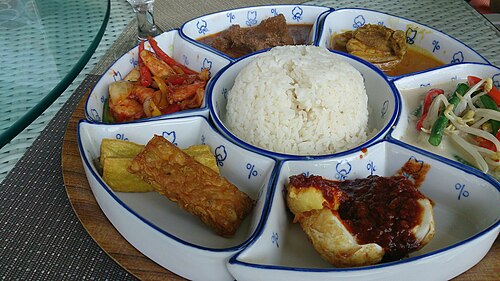
ProjectManhattan, Nasi padang, CC BY-SA 3.0
Continue towards Bugis
From Kampong Glam, you can walk towards Bugis in around ten to fifteen minutes, depending on where you start. Bugis MRT station is also the closest station for visiting Kampong Glam, which makes the two areas easy to combine.Bugis feels busier and more commercial, but it has its own history. The district has changed a lot over the years, but you can still see parts of its trading and entertainment past around the area. Bugis Street is lively and crowded, with stalls selling clothes, accessories and souvenirs. It’s fun to walk through, though it feels very different from the quieter heritage streets nearby.For a calmer experience, continue towards Waterloo Street. This part of the wider Bras Basah–Bugis area brings different religions, communities and styles of architecture close together. Rather than treating each street as a separate attraction, pay attention to how temples, shops, homes and newer buildings share the same space.
