How to Experience Habarana Like a Local: Villages, Lakes, and Hidden Gems
Habarana is often viewed as a convenient stop between major cultural sites, but everyday life here follows a quieter and more functional rhythm. Time is divided between work, worship, and rest, with little separation between these activities. Experiencing Habarana like a local involves noticing where people spend their time and how ordinary tasks shape movement through the area, rather than focusing only on scheduled attractions.
Spend Time at Small Pottery and Craft Yards
Around Habarana, small pottery and craft yards continue to operate on a practical scale. These spaces are usually attached to homes or set slightly away from main roads, producing items such as cooking pots, storage vessels, and household tools. Work is done in stages, with long pauses between shaping, drying, and firing.
There are no demonstrations or set visiting hours. Activity increases and slows naturally throughout the day. Observing these yards shows how skills are maintained through repetition rather than instruction and how work fits quietly into daily routines.
Visit Local Temples During Early Morning Hours
Temples around Habarana are most active early in the morning. Chanting begins before the heat sets in, and attendance is usually limited to nearby residents. Offerings are simple, and movement is unstructured.
Spending time at a temple during these hours provides insight into how religious practice fits into daily schedules. Visits are brief and regular rather than ceremonial. Once chanting ends, activity drops sharply, and the space returns to quiet use.
Spend Time Around Habarana Lake in the Late Afternoon
Habarana Lake is used as a shared space rather than a focal point. In the late afternoon, people walk short sections of the shoreline, sit briefly near the water, or pause while passing through. There is no fixed direction or route.
Fishing activity is spread across the lake without a pattern, and movement along the edges remains slow. Time spent here is usually unplanned and short. The lake functions as part of daily movement rather than a destination, which reflects how it fits into local routines.
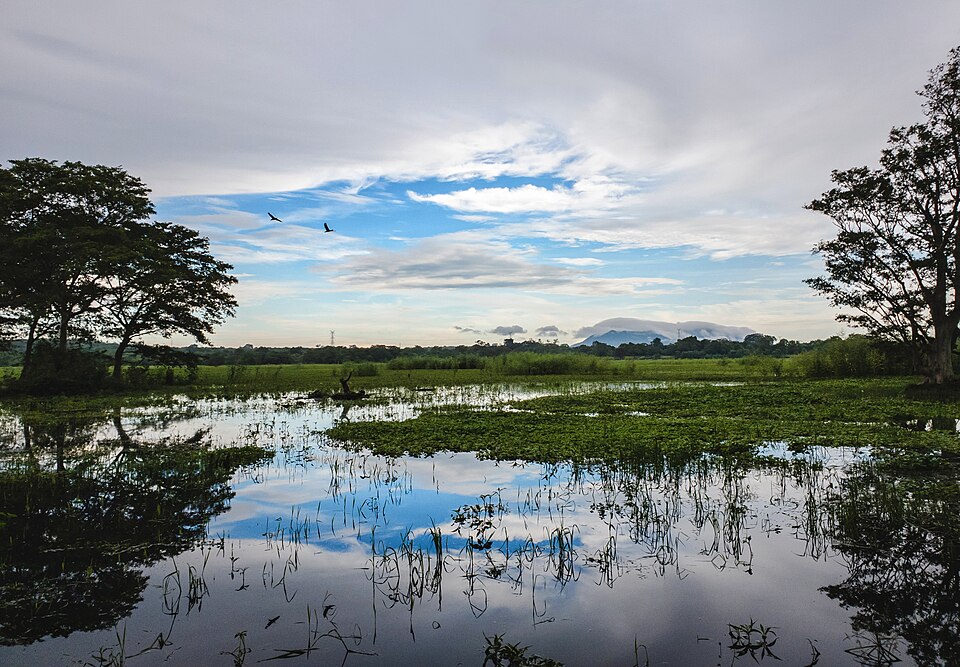
Chulani Iddawela, Habarana lake, CC BY-SA 4.0
Observe Home Gardens in Use
Many households maintain small home gardens for cooking and household needs. These gardens are planted for use rather than appearance, commonly including bananas, curry leaves, chillies, and medicinal plants.
Work happens in short intervals. People step out to collect ingredients, water plants, or check growth before returning indoors. Observing these gardens shows how food and household needs are supported without formal farming or large plots.
Watch Toddy Tapping in the Late Afternoon
Toddy tapping continues in certain areas near coconut groves around Habarana. Tappers move between trees using simple equipment and follow the same routes each day. Late afternoon is when the collection becomes visible, as containers are lowered and sap is transferred.
The process is quick and methodical, shaped by timing rather than volume. It operates without a display and remains part of the local economy rather than a planned activity for visitors.
Visit Ritigala During Midday Hours
Ritigala lies within easy reach of Habarana and is known for its forested ruins rather than formal trails. The site includes stone pathways, reservoirs, and remains of an ancient monastery spread across uneven ground. There is no fixed route, and movement through the area is slow.
Midday tends to be quieter, with fewer visitors. Forest cover creates shaded areas, so movement tends to pause and continue in stages rather than as a single walk.
Use the Area as a Base Without Structured Days
Some travellers stay near areas of regular movement rather than isolated zones. Locations that include Cinnamon Lodge Habarana sit close to roads and paths used throughout the day, which removes the need to plan full-day outings.
Visitors looking for things to do in Habarana often remain nearby without fixed schedules. Short trips tend to replace organised excursions when routine activity is close at hand.
Sit Near Railway Halts and Watch the Pace Change
Small railway halts near Habarana function differently from major stations. Trains pass through quickly, and waiting is informal. People arrive early, linger after trains leave, and use the space without urgency.
Movement increases briefly and then fades, returning the area to quiet. The halt serves as a pause rather than a destination, reflecting how time is handled without strict expectations.
