How Sri Lanka's Leading Ports Are Shaping the Next Era of Maritime Trade
Sri Lanka's position in the Indian Ocean has influenced trade for centuries. Long before modern container ships crossed the region, merchants travelled through these waters carrying goods between major markets. Today, global trade looks very different, yet Sri Lanka's location remains one of its greatest strengths. As supply chains become more connected and competition between ports continues to grow, Colombo and Hambantota are helping shape the country's role in international commerce, but in different ways.
Colombo And Hambantota Play Different Roles
When discussing Sri Lanka's ports, Colombo and Hambantota are often mentioned together, but they serve very different purposes. The Sri Lanka Colombo harbour remains one of the region's busiest transhipment hubs, helping connect cargo moving between major international markets. Companies such as SAGT Sri Lanka play an important role in keeping cargo moving efficiently through the port. Hambantota has developed in a different direction. Alongside shipping activities, it has focused on areas such as vehicle transhipment, logistics services, and industrial investment. This allows the two ports to support different parts of the maritime industry rather than competing for the same opportunities. Together, Colombo and Hambantota strengthen Sri Lanka's position along one of the world's busiest shipping routes while creating opportunities for trade, investment, and economic growth.
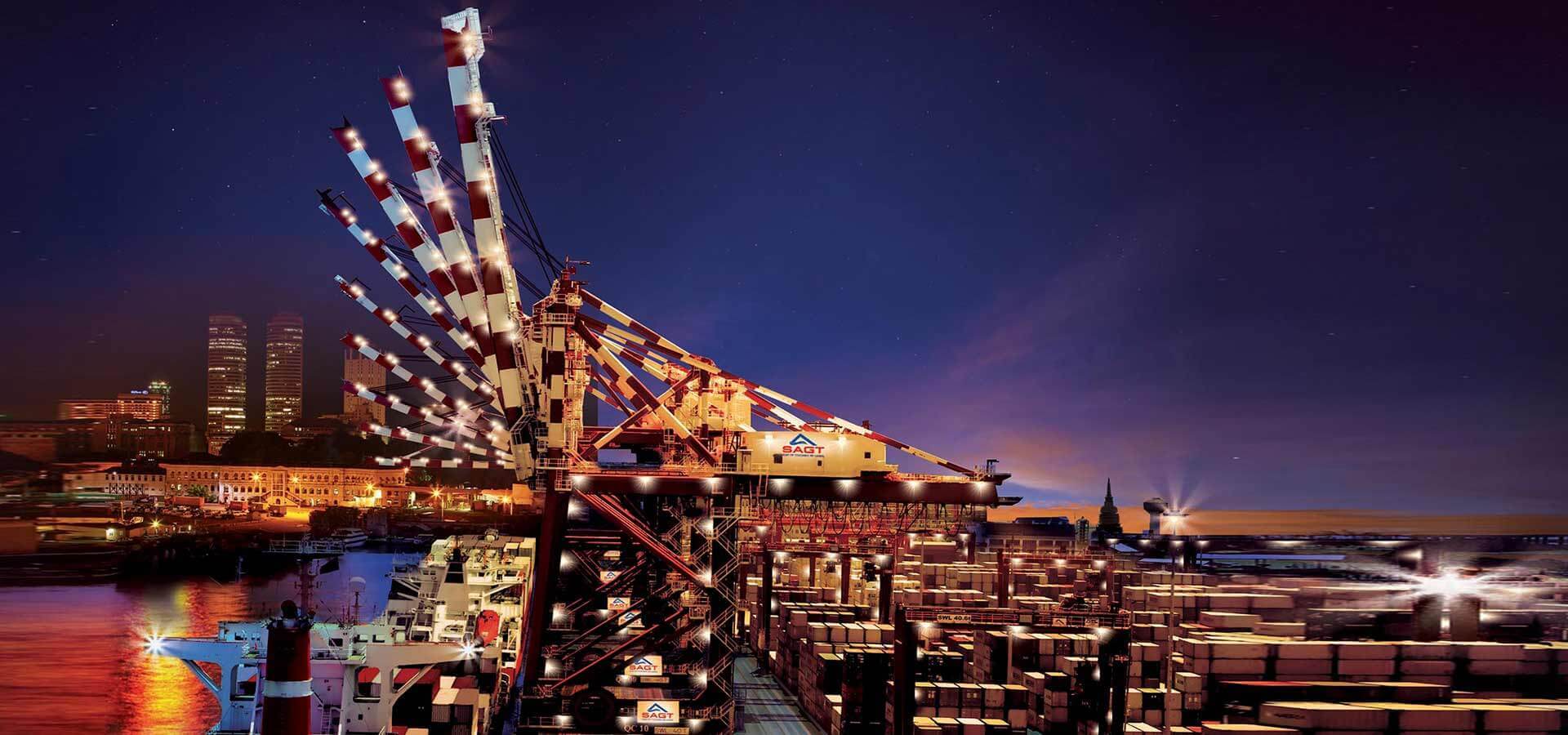
Image via SAGT Sri Lanka
Location Continues to Create Opportunity
One reason Sri Lanka attracts attention within the shipping industry is its geographical location. Some of the world's busiest maritime routes pass close to the island, connecting major economies across Asia, the Middle East, Europe, and Africa. This natural advantage places Sri Lanka in a favourable position within global trade networks. However, location alone is not enough to guarantee success. Many countries benefit from strategic positions, yet only a few successfully transform that advantage into long-term economic value. For ports, this means continually improving services, infrastructure, and efficiency. Colombo and Hambantota have both benefited from their location, but their future growth will depend on how effectively they continue building upon that foundation.
Modern Ports Need to Offer More Than Cargo Handling
The role of ports has expanded significantly over the past few decades. In the past, success was often measured by how many ships arrived and how much cargo was moved. Today, ports are expected to support a much wider range of activities. Logistics operations, warehousing, manufacturing support services, and industrial zones have become increasingly important parts of the equation. Businesses now look for locations that can support entire supply chains rather than simply moving goods from one vessel to another. This shift creates opportunities for ports that can provide integrated services and attract investment beyond traditional shipping activity. For Sri Lanka, the ability to create value around its ports may become just as important as the ports themselves.
Bigger Ships Are Changing Expectations
Global shipping has undergone significant changes as shipping lines continue to operate larger vessels. These ships allow companies to move more cargo in a single journey, improving efficiency across international trade routes. However, larger vessels also create new demands for ports. Deeper channels, larger berths, advanced equipment, and efficient operations become increasingly important. Ports that fail to keep pace with these requirements risk losing competitiveness. Colombo has invested significantly to strengthen its ability to accommodate larger vessels, while Hambantota's development also reflects the need to meet evolving industry standards. The challenge is not simply building larger facilities, but ensuring that every part of the operation can support the speed and scale expected by modern shipping companies.
Technology Is Becoming a Deciding Factor
Modern trade depends heavily on information. Businesses want visibility throughout their supply chains, while shipping companies expect efficient systems that reduce delays and simplify processes. This has made technology one of the most important aspects of port development. Digital platforms, automated systems, cargo tracking tools, and data-driven decision-making are now common features at leading ports around the world. The ports that succeed in the future are likely to be those that combine physical infrastructure with strong technological capabilities. Faster information sharing, improved coordination, and streamlined operations all contribute to greater efficiency.